
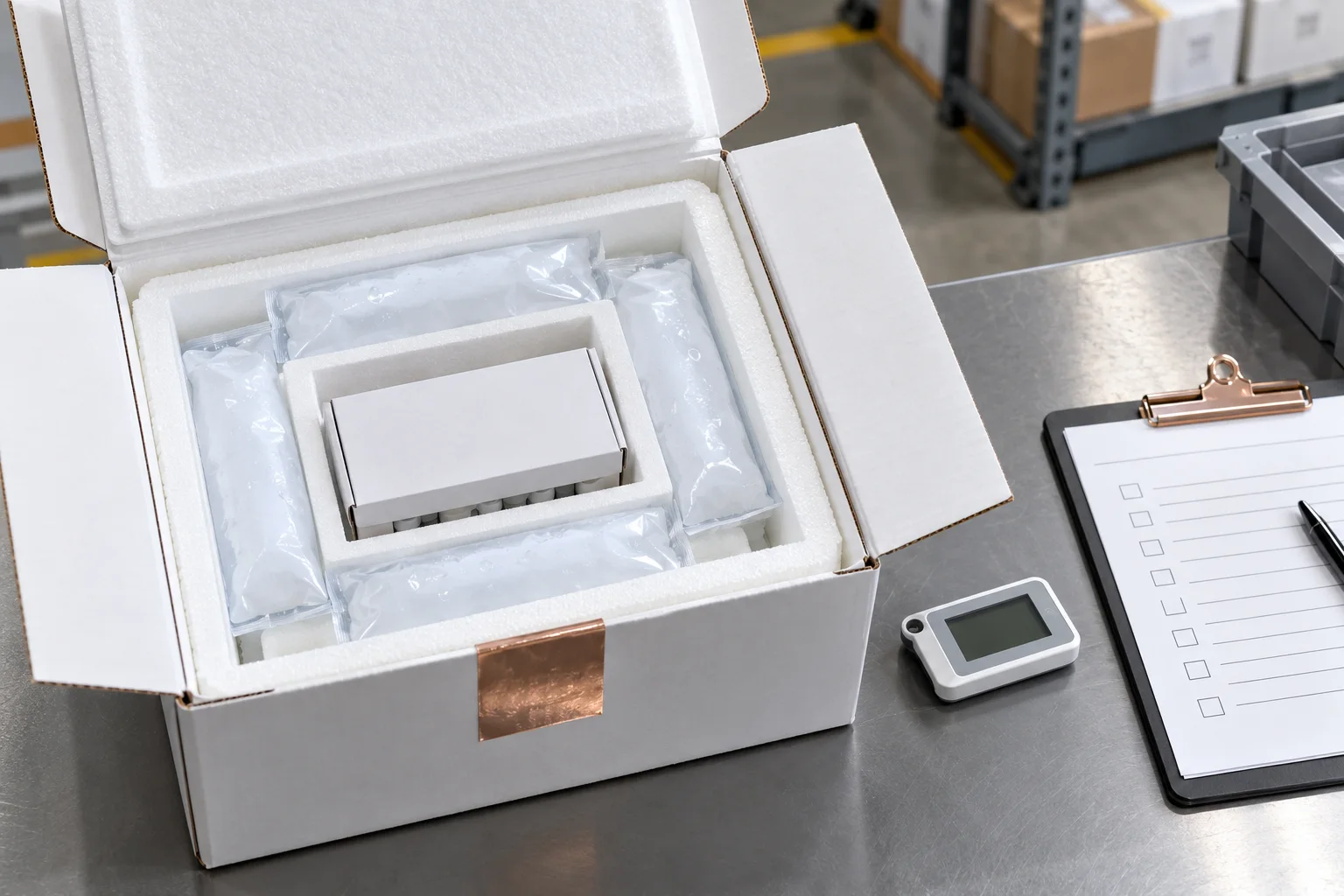
Agree the transport requirement before dispatch
Ask the supplier to distinguish long-term storage instructions from the conditions supported for the proposed shipping route. Confirm the supplied form, container, route and expected transit period. An answer based on a different formulation or container should not be applied to the ordered material without technical justification. Include the receiving site’s operating hours and a contact for an unexpected delay.
The WHO TRS 961 Annex 9 guidance addresses time- and temperature-sensitive pharmaceutical logistics. It provides a reference for transport planning and monitoring, while recognising the precedence of local rules. Applying its general recordkeeping ideas to research procurement does not establish product-specific stability or make a shipment WHO certified.
For the proposed route, record who supplies the monitoring record and who receives it. If the shipment can arrive outside working hours, agree a handover arrangement before dispatch. The plan should identify the responsible contacts without promising a delivery time that has not been confirmed.
- Approved transport conditions and the evidence supporting them.
- Pack configuration and responsibility for route planning.
- Monitoring requirement, logger identifier and placement record when used.
- Receiving contact, delivery window and delay escalation.
- Named technical authority for an excursion decision.
Read a temperature record in context
A logger file needs a connection to the shipment. Record the device identifier, monitoring start and end, timestamp basis and location in the pack when known. A graph without dates or a device number is difficult to connect to a specific consignment. Check the record for gaps and preserve the original export rather than retaining only a cropped screenshot.
If a deviation appears, describe its observed duration and temperature range without deciding that one extreme value proves failure or that an average proves acceptance. The manufacturer’s authorised technical reviewer needs the complete relevant record and material-specific evidence. This article intentionally gives no universal excursion allowance. A generic statement such as “stable in transit” does not explain how a particular event was assessed.
Check the time-zone basis before comparing a logger export with courier events. Retain both the original device timestamps and any documented conversion used in the review. An unexplained clock difference can otherwise make a custody delay appear to be a temperature event at the wrong location.
Information to send with an excursion request
- Product and supplied lot identifiers.
- Shipment number, route and custody timestamps.
- Original logger export and stated time zone.
- Observed packaging condition and supporting photographs.
- The applicable storage/transport specification.
Inspect the shipment before reconciling the paperwork
Record receipt time, package condition, seal condition and any visible damage before discarding the outer packaging. Reconcile the vial and carton identifiers with the packing list and issued COA. Note missing units, mixed lots or labels that cannot be read. These observations support a receiving decision; they do not replace analytical testing or prove the material’s identity.
Separate acceptable administrative corrections from questions that require technical review. A missing address line and an unexplained lot mismatch have different consequences. Keep affected material under the receiving procedure’s hold controls until the designated reviewer decides its status. The lot-to-document checklist provides the surrounding evidence links, while our OEM label article explains how packaging versions can create avoidable discrepancies.
Where several lots arrive together, give each a separate receiving status. Record which logger or package record applies to which material, if that mapping is part of the agreed procedure. One complete document set should not be used to close a gap for another lot.
| Observation | Preserve | Request |
|---|---|---|
| Temperature deviation | Original logger record and timestamps | Material-specific technical assessment |
| Broken seal/damage | Package photographs and custody notes | Documented disposition |
| Lot mismatch | All label and document identifiers | Traceability explanation |
| Missing COA | Shipment and received-lot details | Issued lot-specific record |
Do not use powder appearance as stability evidence
Lyophilised material can still require specific controls. Bachem’s handling note discusses moisture uptake in peptides and the need for suitable storage. Its recommendations concern its materials; they cannot establish the storage conditions of every research peptide. Use the offered lot’s approved documentation instead of borrowing another supplier’s temperature statement.
A receiving photograph can document a changed appearance, damaged closure or visible moisture. It cannot quantify chemical degradation or establish unchanged purity. If the review requires a test, agree the question, sampling responsibility and decision criteria with the quality team. This procurement guide does not supply reconstitution, processing or treatment instructions, and it does not recommend using material with unresolved shipping deviations.
Keep photographs linked to the package and lot they document, with the date of receipt. They can support an observation such as a broken closure, but the technical reviewer still needs the appropriate evidence to decide whether the material meets its agreed acceptance criteria.
Close the event with an authorised decision
A useful event record identifies the lot, deviation, evidence reviewed, decision and approving role. State any limitations on the decision, including a requirement for additional evidence. Keep the outcome with the receiving file so a later reorder or complaint review can retrieve it. A verbal reassurance is difficult to audit and may not explain what the reviewer actually assessed.
Discuss shipment documentation through the technical enquiry route before confirming an order. The quality page describes the site’s enquiry boundaries. Shipping availability, paperwork and destination acceptance need confirmation for the actual project. No packing photograph, courier service name or research label establishes permission for human use or guarantees clearance in every country.
Before closing the event, check that the decision refers to the actual supplied form and lot. Store any replacement document alongside the original version and its explanation. This gives a later complaint reviewer a record of what changed and who authorised the final receiving status.
Frequently asked questions
Do all lyophilized peptides require the same cold chain?
No universal transport condition follows from the word lyophilized. Agree the condition supported for the actual material, container and shipping arrangement.
Can a shipment be accepted because its average temperature looks normal?
An average alone does not explain a temperature deviation. Preserve the relevant record and obtain a material-specific assessment from the authorised technical reviewer.
Does an unchanged powder appearance prove that shipping caused no degradation?
No. Appearance can document observations but does not establish chemical stability or unchanged analytical results.
What should a buyer do when the logger record is missing?
Record the gap and seek the evidence required by the agreed shipping and receiving procedure. Do not invent temperature history or assume that an absence of alarms proves acceptable conditions.
Sources and editorial basis
References checked on 31 October 2026. The checklists and examples are editorial procurement guidance. Pharmaceutical standards are cited for their stated scope; they do not certify this supplier, a research material or a shipment.
Scope: B2B research-material procurement. This article provides no dosing, treatment or human-use instructions. Product-specific acceptance requires the signed specification and actual lot records.
Request a specification and document review with the material identifier, supplied form, quantity basis and destination. Availability and test scope require project confirmation.